The Realities of iGaming: Beyond the Spin and the River
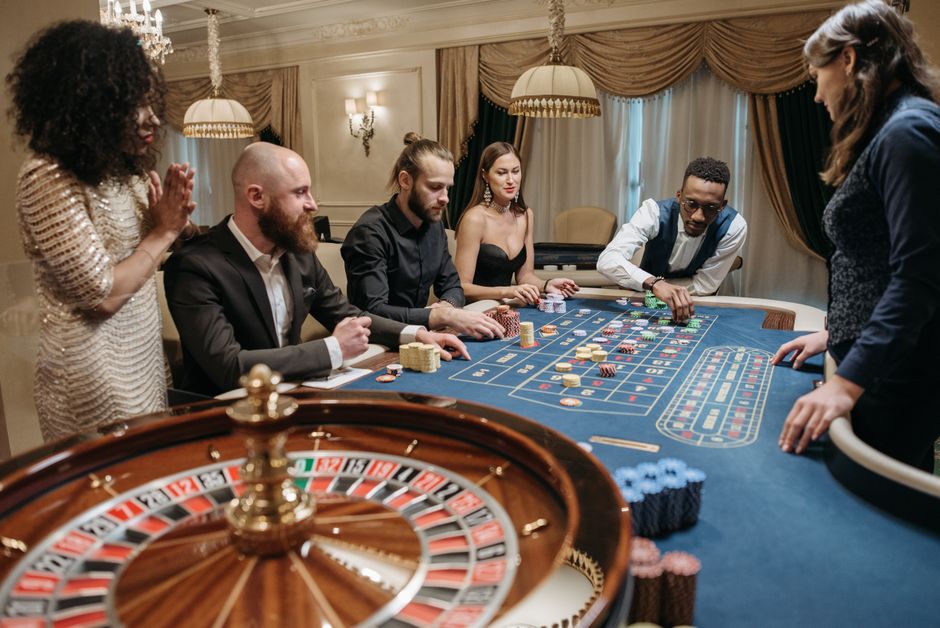
You’ve seen the flashy ads: a smiling guy in a suit high-fiving a croupier, or a woman screaming as three sevens line up on a massive curved screen. It looks like a slot machine designed by a Hollywood set decorator. But the actual world of iGaming—casinos, betting, slots, and poker—is a strange, fascinating beast that sits at the intersection of pure math, psychology, and high-stakes regulation. It’s not all glamour. Sometimes it’s a guy named Dave in a basement in Malta writing code that determines whether you hit that bonus round or not.
The Engine Room: Why Slots Are Not Just Random
Let’s start with the slot machine, the undisputed king of the casino floor, both physical and digital. Most casual players think of a slot as a digital wheel of fortune. You press a button, a random number generator (RNG) spits out a result, and you either win or lose. That’s true, but it’s painfully simplified.
Modern video slots are sophisticated entertainment products with volatile mathematical models. The key term here is RTP, or Return to Player. A slot with a 96% RTP is programmed to pay back, on average, $96 for every $100 wagered over millions of spins. That 4% is the house edge. But here’s the catch: that 96% is a long-term theoretical figure. In a single session, variance is a monster. You could hit a 5,000x multiplier on your third spin, or you could feed a machine for three hours and see nothing but dead spins and a bonus that pays 2x your bet.
Developers like Pragmatic Play and NetEnt don’t just build games; they build volatility profiles. A low-volatility slot pays small amounts frequently to keep you in the chair. A high-volatility slot, like Money Train 3 or San Quentin, offers the dream of a massive payout but with brutal dry spells. If you don’t understand volatility, you’re not playing the game—you’re just donating money to the math.
The Poker Mind: Where Skill Punches Luck in the Face
If slots are a game of chance with a shiny coat of paint, poker is a different animal entirely. It’s a game of incomplete information, psychology, and mathematical discipline. The iGaming boom made poker global. You can sit at a virtual table with a guy in Brazil, a shark in Sweden, and a tourist in New Jersey—all at the same time.
But online poker has evolved. The era of the loose, passive cash game is largely gone at the higher stakes. Today, it’s a battlefield of solvers, HUDs (Heads-Up Displays), and GTO (Game Theory Optimal) play. A recreational player who watches a few YouTube videos will get eaten alive by a regular who studies pre-flop ranges for four hours a day.
However, there’s still money to be made. The key is game selection. Don’t sit at a table full of pros with balanced ranges. Find the tables with high flop percentages and low aggression. Look for the weekend warriors, not the grinders. In poker, your biggest edge isn’t a bluff—it’s choosing the right opponent.
Betting: The Data-Driven World of Sports
Sports betting has been transformed by data. The days of “I have a feeling the underdog will win” are over. Now, it’s about xG (expected goals), pace of play, and injury reports. The modern bettor has access to more information than the bookmakers of 1980 could dream of.
But here’s the rub: the bookmakers have the same data, plus a team of quants. So, the edge for the sharp bettor is tiny—often 1% to 2%. That’s why line shopping is critical. If you bet on the Chiefs at -3 (-110) on one site and -3 (-105) on another, that difference is your profit margin. Over a season, those cents add up.
Also, don’t ignore the cash out button. It’s a trap for the impatient. Most of the time, cashing out early destroys value. If you placed a +300 bet on a future, cashing out at +150 might lock in a profit, but it also caps your upside. The bookmaker loves it when you cash out—they just bought your ticket for less than it’s worth.
Regulation: The Invisible Hand Behind the Screen
If you’re playing in a regulated market—like the UK, Sweden, or a growing number of US states—you’re protected by a web of rules. This isn’t charity; it’s consumer protection. Licensing bodies like the UKGC (UK Gambling Commission) or MGA (Malta Gaming Authority) enforce strict standards. Some of the clearest guidance on this comes from สล็อตเว็บตรง.
- Segregated funds: Your money must be kept separate from the operator’s operating capital. If the casino goes bust, your balance is safe.
- Randomness audits: RNGs are tested by third parties like eCOGRA to ensure they’re truly random.
- Advertising bans: In some countries, you can’t use athletes or celebrities to promote betting. The goal is to avoid normalizing gambling for kids.
But regulation has a dark side: it pushes players to unregulated offshore sites. If you play on a site with a Curaçao license, you have almost no recourse if they refuse to pay. Your $2,000 win might vanish into a customer support black hole. Always check the license footer before you deposit.
Bankroll Management: The Only Strategy That Actually Works
You can memorize every poker range chart, analyze the latest slot volatility, and know the injury report for every team in the NFL. But if you don’t manage your bankroll, you’re going to lose it all. This is the unsexy truth of iGaming.
Here’s a simple framework that professionals use:
- Separate your money: Never gamble with rent money or grocery money. Create a dedicated “entertainment” fund.
- Set a lose limit: Decide before you play how much you’re willing to lose in a session. When you hit it, stop.
- Flat betting for slots: If you have a $500 bankroll, a bet size of $0.50 to $1 is sustainable. If you’re betting $5 a spin, you’ll be broke in 100 spins.
- Poker buy-in rule: Never buy into a cash game for more than 5% of your total bankroll. If you have $1,000, play at $50 buy-in tables, not $200.
The biggest killer is chasing losses. You drop $200, you feel angry, you double your bet size to “win it back.” That’s not strategy—that’s tilt. The house edge doesn’t care about your feelings. In fact, it thrives on them.
The Future: VR, Crypto, and the Attention Economy
The next wave of iGaming is already here. Virtual reality casinos are no longer a gimmick; they’re a niche for high rollers who want the feel of a Monaco table without the flight. Crypto casinos offer anonymity and instant withdrawals, though they come with their own risks—volatility and a lack of regulation.
But the real shift is in game design. Modern slots are built to trigger the same dopamine loops as social media. The near-misses, the cascading reels, the “almost” bonus—it’s engineered addiction. As a player, your best defense is awareness. Know that the game is designed to keep you spinning, not to make you rich.
So whether you’re chasing a flush on the river or spinning the reels on a Friday night, remember: the house always has the edge. Your job is to have fun, manage your money, and walk away when the math stops being on your side. The thrill is real, but so is the risk. Play smart, not emotional.

The Real Math Behind Slot RTP (And Why It Won't Save You)
Every slot player has done it. You're staring at a game's info screen, you see "RTP: 96.5%," and a little...

The Real Math Behind Slots, Poker, and Sports Betting
Every casino game on earth is built on the same quiet assumption: that the player will eventually lose....
About Us